Anthropic just paid authors $1.5 billion for pirated books — days after Albo called it theft
A US judge has approved Anthropic's $1.5 billion payout to authors whose books it pirated to train Claude, giving Albanese's "anything less is theft" line a price tag as the company courts Australia.
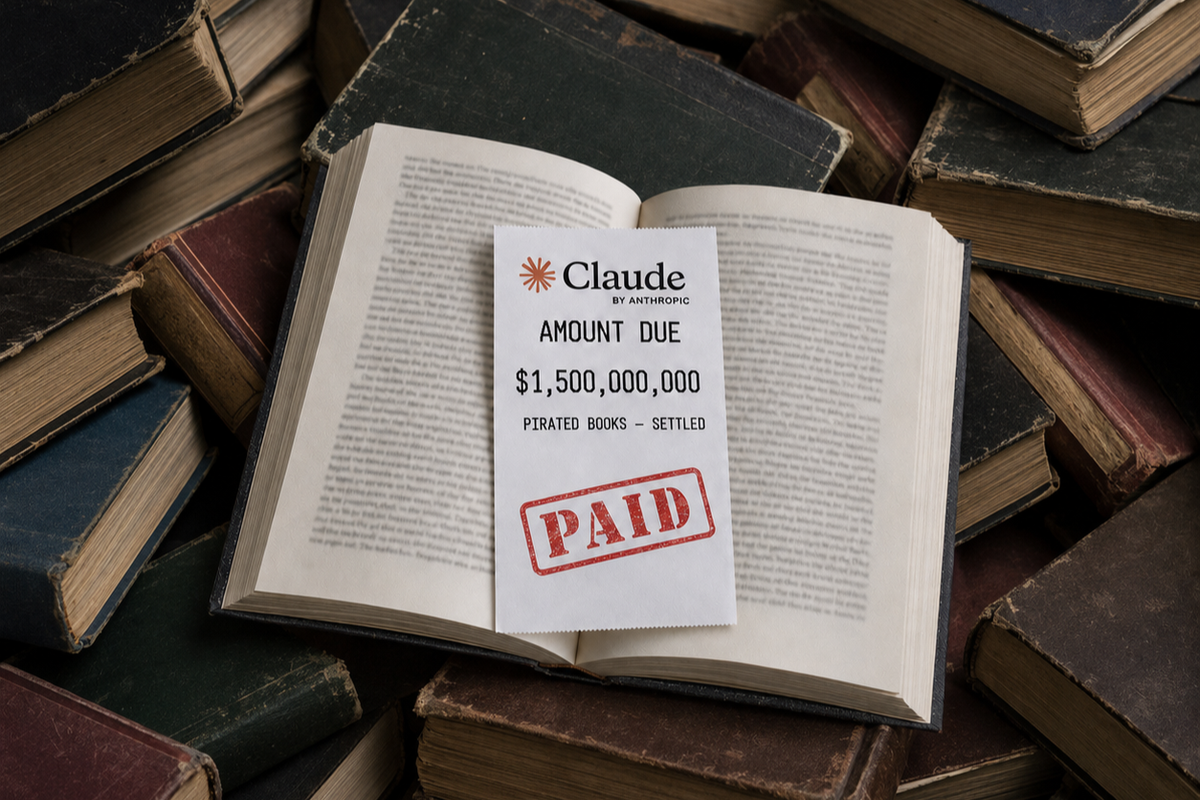
A US federal judge has approved the largest copyright settlement in the country's history.
Anthropic will pay roughly half a million authors and publishers about $3,000 a book — $1.5 billion in total — for pirated copies of their work it downloaded to train Claude.
The same Claude that Australians use more than anyone else on earth.
Judge Araceli Martínez-Olguín signed off on the deal on Monday, San Francisco time, in a case called Bartz v. Anthropic. It was brought in 2024 by novelists Andrea Bartz and Charles Graeber and non-fiction writer Kirk Wallace Johnson, on behalf of about 500,000 works.
The court had already found the shape of the wrongdoing. Training an AI on legally bought books is fair use. Downloading pirated copies from shadow libraries like LibGen and storing them permanently is not. Anthropic admitted it did the second thing.
Five days ago, Anthony Albanese stood up in Sydney and described exactly this.
"No company should use Australian books, music, art, or news to build or train AI without the artist's control," the Prime Minister said. "Anything less is theft."
He now has a number for it, stamped by a court, attached to the company that wants to build its second global training hub on Australian soil.
Anthropic has told the government its proposed $21.6 billion investment depends on clarity of copyright settings. It wants 1.4 gigawatts of local data centre power. Chief executive Dario Amodei met Treasurer Jim Chalmers in April to press the case for copyright reform.
The settlement it just signed is what the company's business model looks like when a court gets to it first.
But here is the part that should worry the artists Albanese named. Anthropic settled precisely so no court ever rules again.
The fair-use finding that sits underneath the deal was a single district-court decision by Judge William Alsup, who has since retired. Because Anthropic paid rather than fought, the case never reaches an appeals court, and never becomes binding law. Every other suit — against Meta, Google, OpenAI, Midjourney — starts from scratch.
Which is the whole argument for legislating.
If the courts won't set the rule, and a company will spend $1.5 billion to make sure they don't, the only thing that makes theft illegal is a law that says so. Albanese has promised one. It is due early next year, subject to the agreement of every state and territory, with copyright reform still reduced to a single line about consultation.
The Prime Minister supplied the word. A US court has now supplied the price.
The law that would connect them is still not written.